
A recent investigation by The Globe and Mail reveals the staggering toll opioids have taken on Canada’s construction workforce, its workers, and the Canadian economy at large. Below is a breakdown of the findings within the article:
Construction Workers Are at the Epicenter of the Opioid Crisis
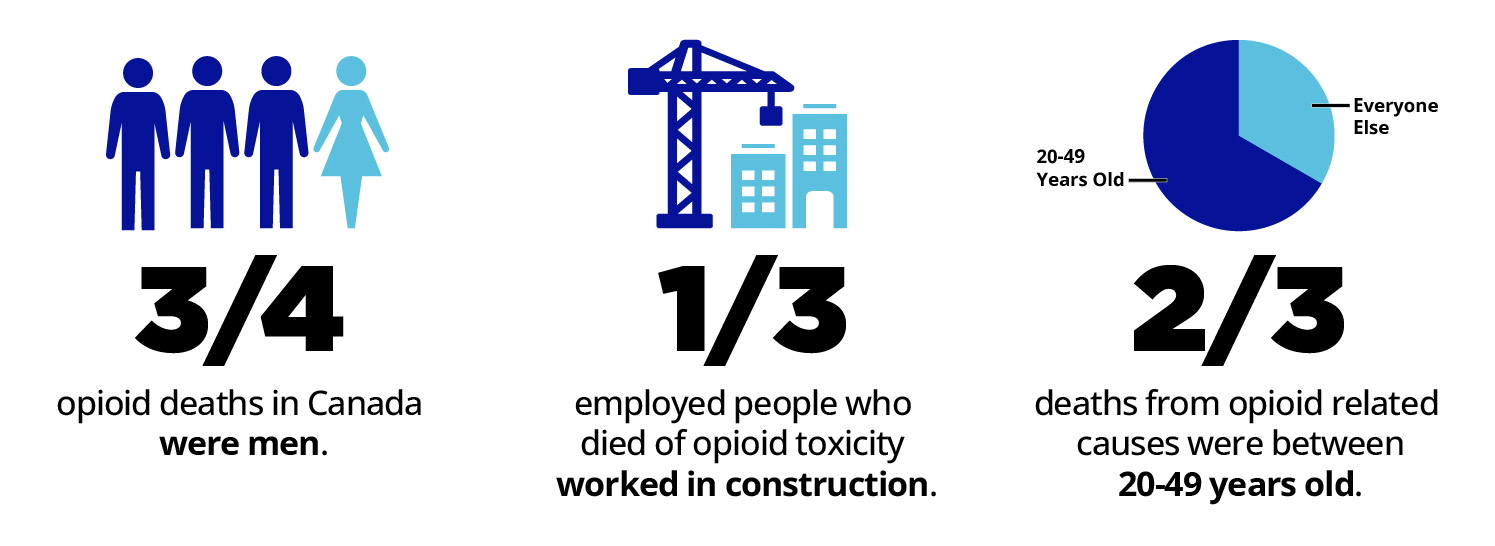
Although opioid misuse affects all communities, it has hit one sector harder than any other: construction. According to the Globe and Mail article:
• Men account for three-quarters of all opioid deaths in Canada. Construction remains a male-dominated field, making workers disproportionately vulnerable.
• In Ontario, one-third of employed people who died of opioid toxicity worked in construction. Similar patterns appear across the country, including B.C., where nearly half of employed overdose victims worked in the trades.
Construction is physically demanding and often injury prone. This environment has contributed to widespread reliance on prescription painkillers and, tragically, illicit opioids like fentanyl.
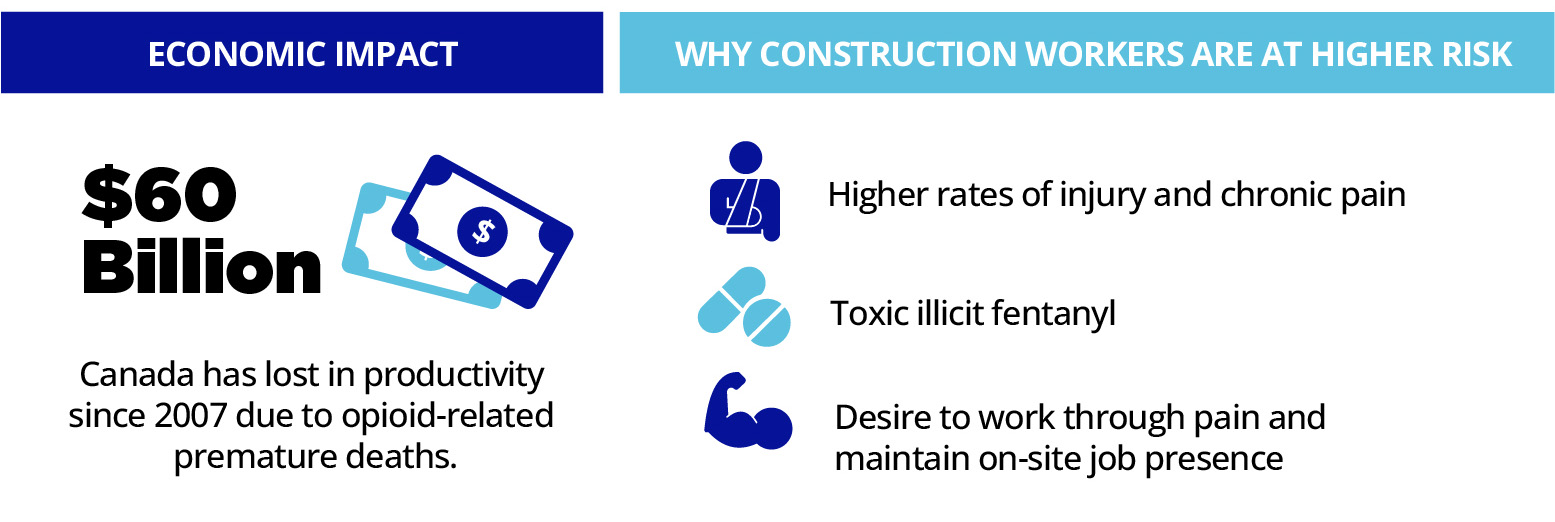
The Economic Impact: More Than $60 Billion Lost
The crisis isn’t only a human tragedy – it’s an economic one.
• Canada has lost more than $60 billion in productivity since 2007 due to opioid-related premature deaths. This includes wages that would have been earned if victims had lived full working lives.
• Construction is already facing major labour shortages, and the opioid epidemic is accelerating that loss. As Canada ramps up housing and infrastructure development, the strain on skilled trades will only grow.
Why Construction Workers Are at Higher Risk
The Globe and Mail highlights several factors that explain why opioid deaths are so concentrated in construction:
1. High rates of injury and chronic pain:
Years of heavy lifting, repetitive strain, and physically taxing labour lead workers to seek pain relief. When opioids are prescribed—sometimes too readily—they can become addictive.
2. Toxic illicit fentanyl:
Even a single exposure to fentanyl-laced street drugs can be fatal. Many workers using drugs to self-medicate chronic pain don’t know their supply is contaminated.
3. “Don’t show weakness” culture:
Many workers have a desire to work through pain and maintain on-site job presence even with they are hurt or shouldn’t.
Where Medical Cannabis Fits In
Research and patient experience suggest cannabis can play a meaningful role in:
• Managing chronic musculoskeletal pain
• Supporting sleep and recovery
• Reducing reliance on addictive opioids
• Improving quality of life without the same overdose risk
For construction workers who face pain daily, cannabis may offer a safer alternative when recommended by a healthcare professional.
A Message to the Community: You’re Not Alone
If you are struggling with pain, stress, or substance use, there is no shame in asking for help. As the Globe and Mail article emphasizes, many workers who died from opioids were employed, capable, talented, and deeply valued by their families and coworkers.
Reaching out is a sign of strength – not weakness.
Source: All data, quotes, and findings summarized in this blog article originate from:
Jason Kirby, “How opioid deaths are hollowing out the construction industry,” The Globe and Mail, Nov. 21, 2025.